Where Are Android Phones Made? Manufacturing by Brand
Which countries make Android phones, brand by brand — Samsung, Google Pixel, Xiaomi, OnePlus and Motorola — and why so much moved out of China.
Short answer
Most Android phones are made in China, India and Vietnam. Samsung builds mainly in Vietnam and India, Google Pixels are made in Vietnam and India, and Chinese brands such as Xiaomi and Oppo manufacture largely in China and India.
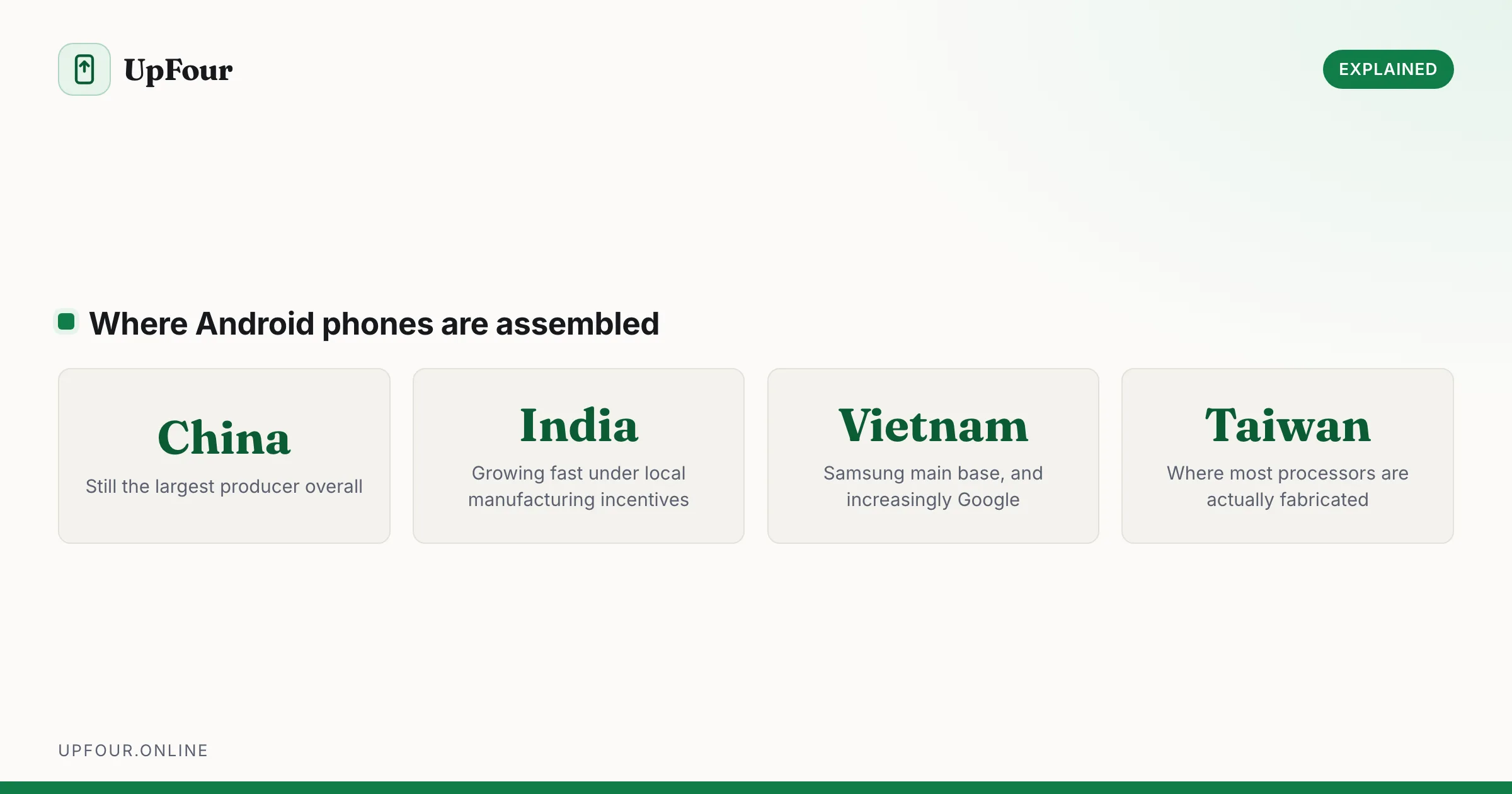
Android phone manufacturing is concentrated in three countries. Which one built your phone depends mostly on the brand and where you bought it.
The three main countries
| Country | Role |
|---|---|
| China | Still the largest producer overall, especially for Chinese brands |
| India | Rapidly growing under government manufacturing incentives |
| Vietnam | Samsung's main base, and increasingly Google's |
By brand
Samsung
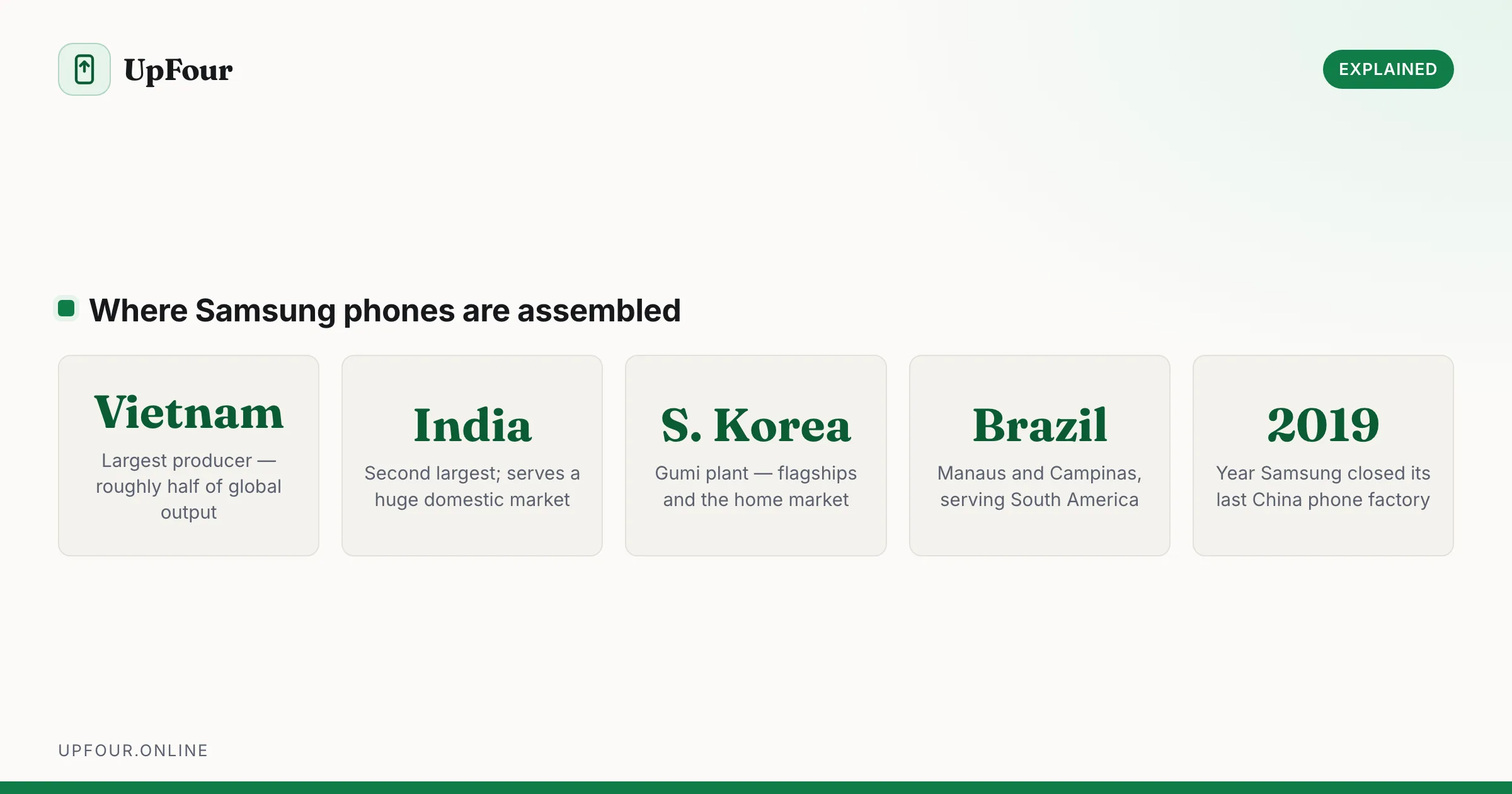
Mainly Vietnam, which produces roughly half of Samsung's global output, followed by India, with smaller volumes from South Korea, Brazil and Indonesia.
Samsung closed its last Chinese phone factory in 2019 after labour costs rose and its market share in China collapsed against domestic brands. See where Samsung phones are made for the detail.
Google Pixel
Google shifted Pixel production out of China to Vietnam, and later added India for models serving the Indian market. The move was driven by tariffs and supply chain diversification.
Xiaomi, Oppo, Vivo, Realme
Primarily China for domestic and many export markets, with substantial India production for the Indian market, where import duties make local assembly close to mandatory.
OnePlus
Owned by the same parent group as Oppo, and manufactured on the same lines — mainly China, with India production for that market.
Motorola
Owned by Lenovo, a Chinese company. Manufacturing in China, India and Brazil, the last serving South America.
Nothing
Designed in London, manufactured in China and India.
Why manufacturing moved out of China
Several forces at once:
- Rising labour costs. Chinese wages rose substantially, eroding the original cost advantage.
- Tariffs and trade tension, particularly between the US and China, which made Chinese assembly expensive for US-bound products.
- Supply chain diversification. Pandemic-era shutdowns demonstrated the risk of single-country concentration.
- Indian incentives. India's production-linked incentive schemes, combined with high import duties, made local assembly strongly preferable for that market.
The shift is real but partial. China remains the largest producer, and it dominates the component supply chain even for phones assembled elsewhere.
Assembly is not the whole story
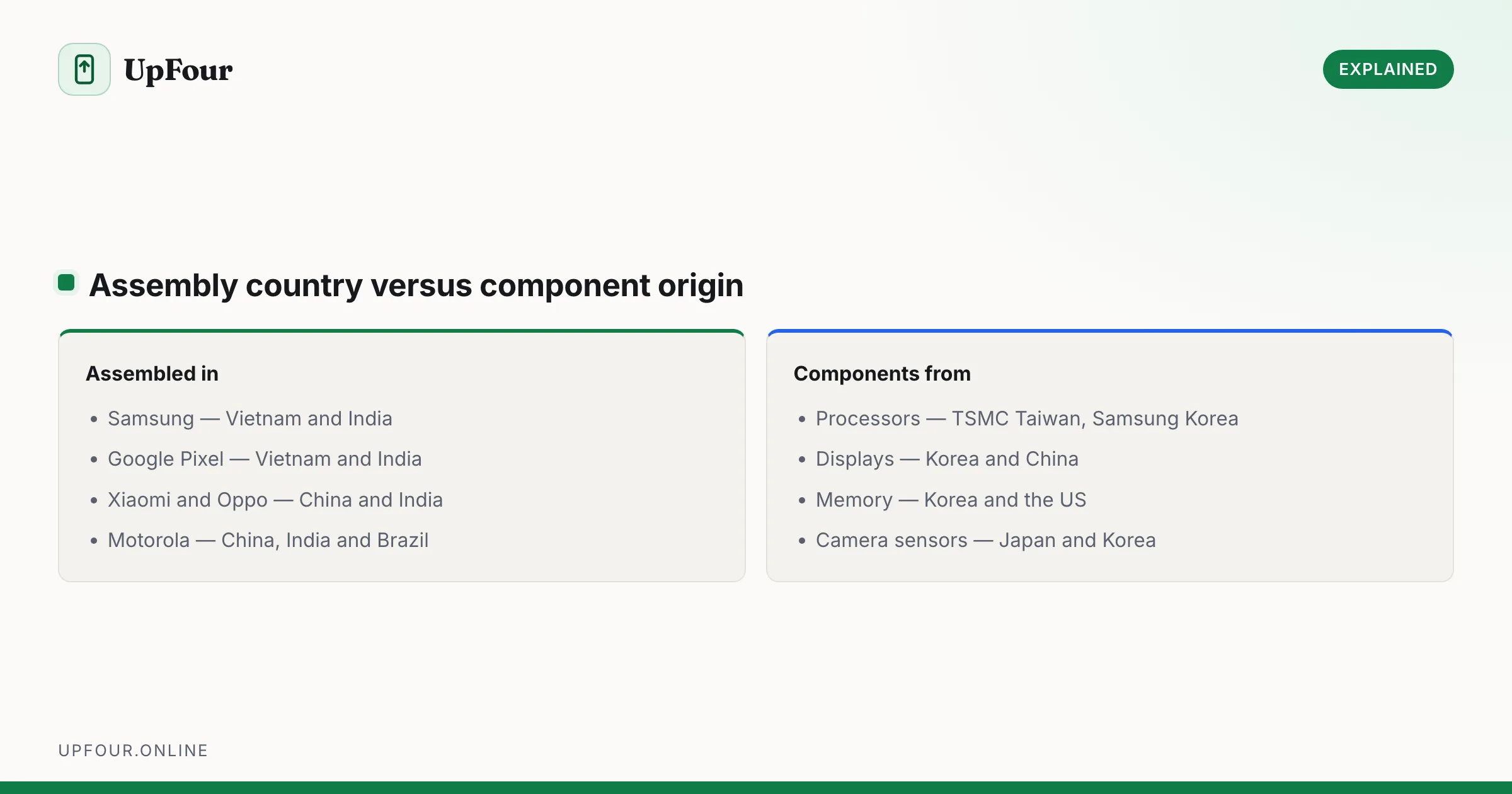
"Made in Vietnam" describes final assembly. The components come from across the world:
- Processors — designed by Qualcomm, MediaTek, Google or Samsung; fabricated by TSMC in Taiwan or Samsung in South Korea. Taiwan's role here is a genuine strategic concentration.
- Displays — Samsung Display and LG Display in South Korea, BOE and CSOT in China.
- Memory and storage — Samsung and SK Hynix in South Korea, Micron in the US.
- Camera sensors — Sony in Japan, Samsung in South Korea.
- Batteries — largely China, plus South Korea and Japan.
No smartphone is sourced from a single country. A phone assembled in India may contain a Taiwanese processor, a Korean display, a Japanese camera sensor and a Chinese battery.
How to check where your phone was made
- The retail box — a "Made in ___" marking near the barcode and regulatory text.
- The SIM tray or rear casing fine print.
- Settings › About phone on some regional builds.
- The model number, which encodes the regional variant.
Does it affect quality?
Not meaningfully. Manufacturers build to identical specifications and quality standards regardless of plant, and the factories are frequently operated by the same contract manufacturers — Foxconn, Pegatron and others run facilities in several countries.
What genuinely varies by region:
- Chipset variants. Some models ship Snapdragon in one region and Exynos or MediaTek in another. This is a real difference, decided by market rather than factory.
- Cellular band support, which matters for imported phones.
- Preinstalled software and carrier customisation.
- Warranty validity, usually limited to the country of purchase.
Where Android itself comes from
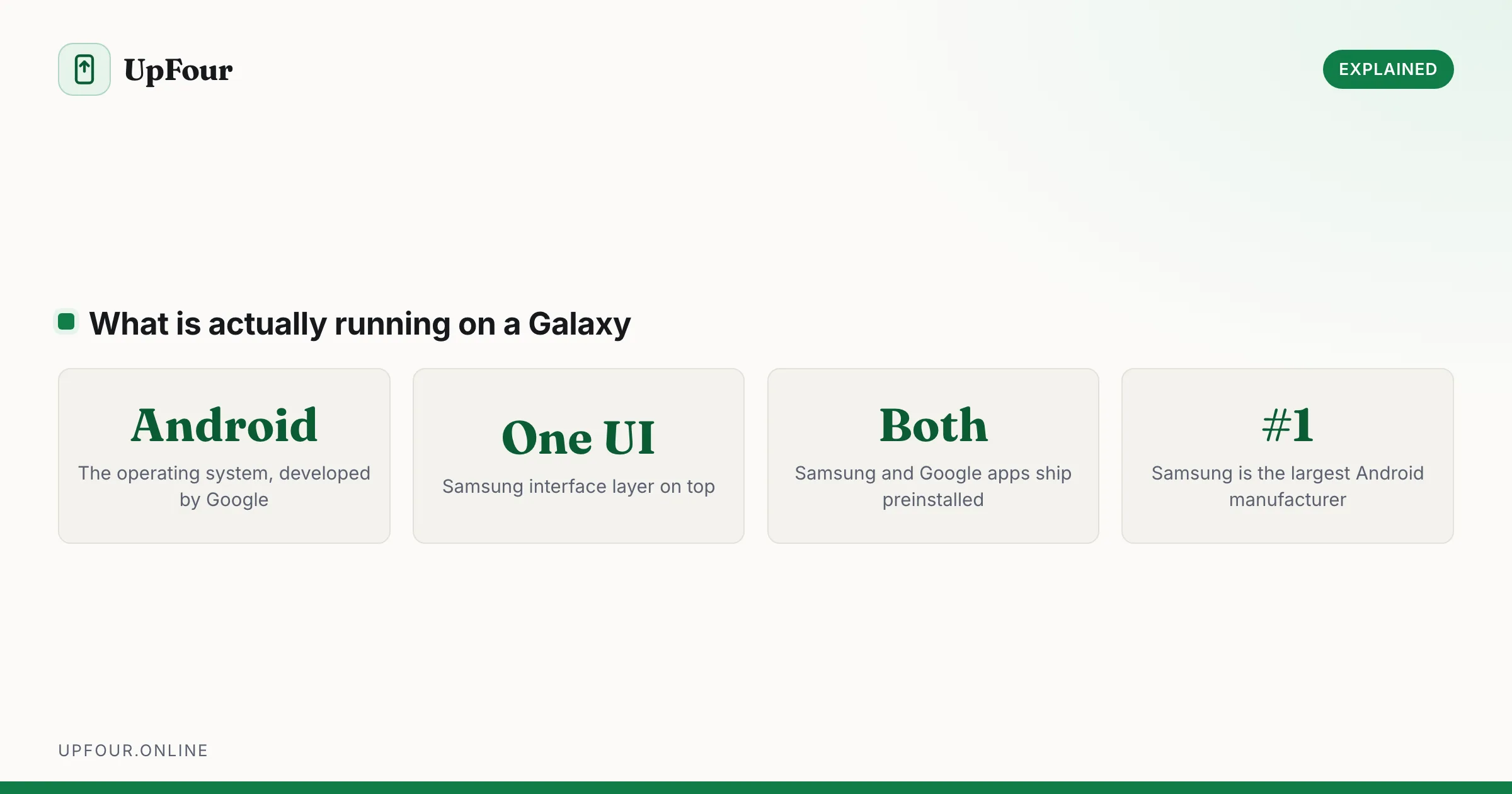
Separately from hardware: Android is developed by Google in the United States and released as open source. Manufacturers add their own layer on top — Samsung's One UI, Xiaomi's HyperOS, and so on.
So an Android phone assembled in Vietnam by a Korean company runs an American operating system with a Korean interface, using a Taiwanese processor. That is the normal state of the industry, not an unusual case.
In short
Android phones are made mainly in China, India and Vietnam. Samsung builds in Vietnam and India; Google Pixels in Vietnam and India; Chinese brands largely in China and India. Assembly location has little bearing on quality, but the regional model variant can genuinely differ in chipset and band support.
Frequently asked questions
Where are most Android phones made?
Mainly in China, India and Vietnam. China remains the largest producer overall, but Samsung builds primarily in Vietnam and India, and Google moved Pixel production to Vietnam and India.
Are Google Pixel phones made in China?
No longer. Google shifted Pixel manufacturing to Vietnam, and later added India for that market, driven by tariffs and supply chain diversification.
Why did phone manufacturing move out of China?
Rising labour costs, tariffs and trade tension, a desire to diversify supply chains after pandemic shutdowns, and Indian government incentives combined with high import duties that make local assembly necessary for that market.
Does the country of manufacture affect phone quality?
Not meaningfully — manufacturers build to the same specifications everywhere, often using the same contract manufacturers. Regional model variants can differ in chipset and cellular band support, which matters more than the assembly location.
Sources & further reading
Official documentation used while writing and checking this guide. Every link was verified at the last update.
- Samsung phone specifications databaseGSMArena
- Samsung Global NewsroomSamsung
- Android platform releases and version historyAndroid Developers
- Electronics donation and recyclingUS Environmental Protection Agency
Machine-readable version: Markdown source
Related guides
Where Are Samsung Phones Made? The Full Country List
Samsung phones are built mainly in Vietnam, India and South Korea. Here is which country makes which model, and why Samsung left China entirely.
Is a Samsung an Android Phone? Yes — Here's What One UI Actually Is
Samsung Galaxy phones run Android with Samsung's One UI on top. Here is what that means, what Samsung changes, and why it matters when following guides.
Where Are Samsung TVs Made? Country List by Region
Samsung TVs are built in Mexico, Hungary, Slovakia, Vietnam, India and elsewhere. Here is which plant supplies which market, and where the panels come from.