How Much Does a Samsung Phone Cost? Price Tiers Explained
What Samsung phones cost across the A-series, S-series, Ultra and foldables — and when in the year each tier is genuinely cheapest.
Short answer
Samsung phones span roughly four tiers: budget A-series, mid-range A-series, S-series flagships, and foldables at the top. Prices vary by region and change constantly, so use the tiers to decide what to shop for, then check current pricing.
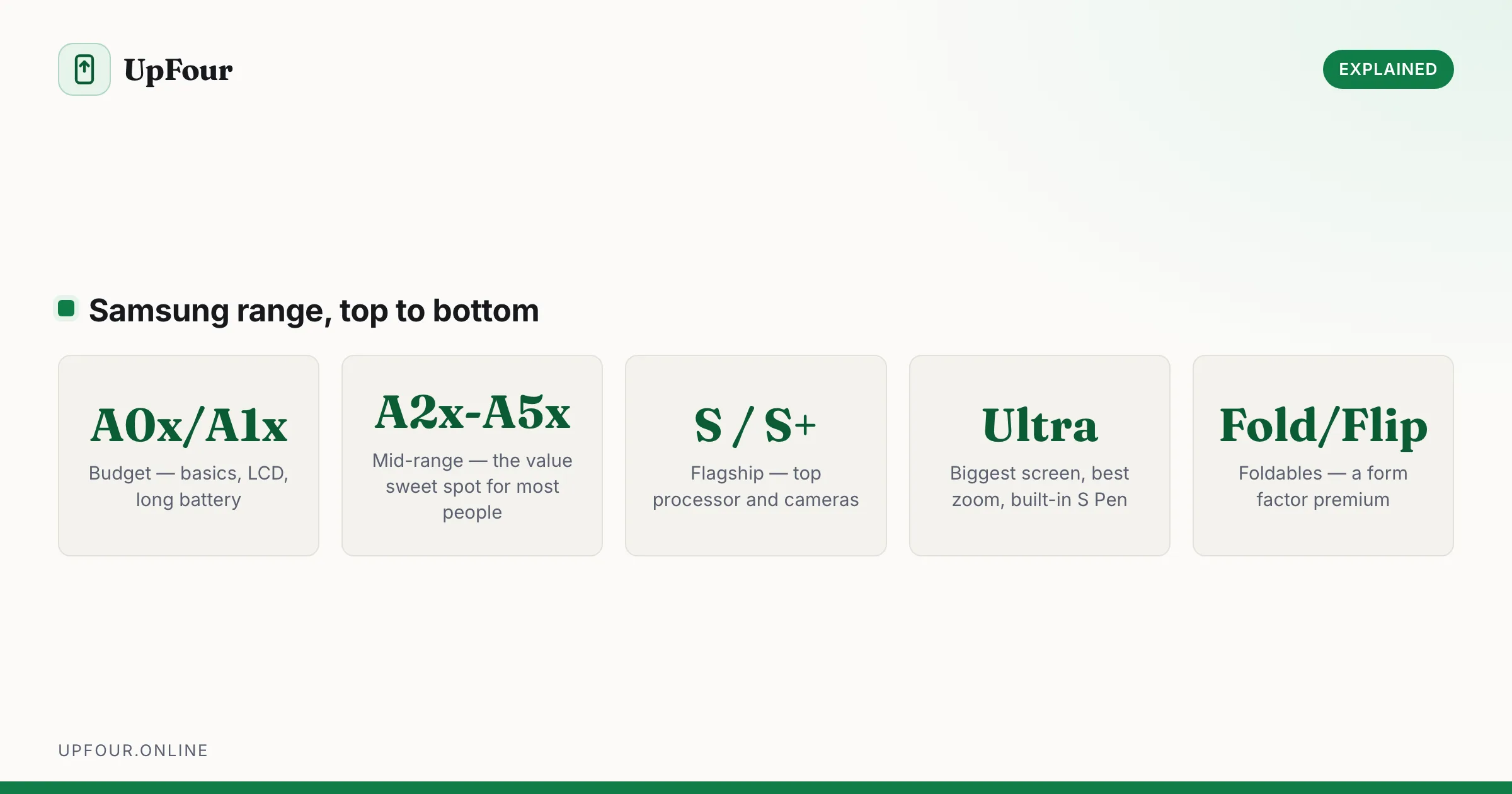
Exact prices change weekly and vary by country, so specific figures date badly. What does not change is the structure of Samsung's range and when each tier drops in price. That is the useful part.
The four tiers
| Tier | What you get |
|---|---|
| Galaxy A0x / A1x (budget) | Basic performance, LCD screen, adequate camera, long battery |
| Galaxy A2x / A3x / A5x (mid-range) | AMOLED, solid cameras, good battery, most people's sweet spot |
| Galaxy S / S+ (flagship) | Top processor, excellent cameras, premium build, high refresh rate |
| Galaxy S Ultra | Largest screen, best cameras, built-in S Pen |
| Galaxy Z Flip / Z Fold | Folding screens; Fold is the most expensive Samsung makes |
Where the value actually is
The mid-range A-series is where most people should look. An A5x-class phone gives you an AMOLED screen, a capable camera, all-day battery and several years of updates for a fraction of flagship money. For messaging, browsing, video and normal photography, the practical difference against a flagship is smaller than the price gap suggests.
Flagships earn their price on camera versatility in poor light, sustained performance for gaming, and build materials. If you photograph a lot in difficult conditions, that gap is real.
Ultra models add the S Pen and the longest zoom. Worth it if you actually use either.
Foldables carry a genuine premium. You are paying for a novel form factor rather than better specifications — a Fold's cameras are typically comparable to a standard S, not an Ultra.
When Samsung phones are cheapest
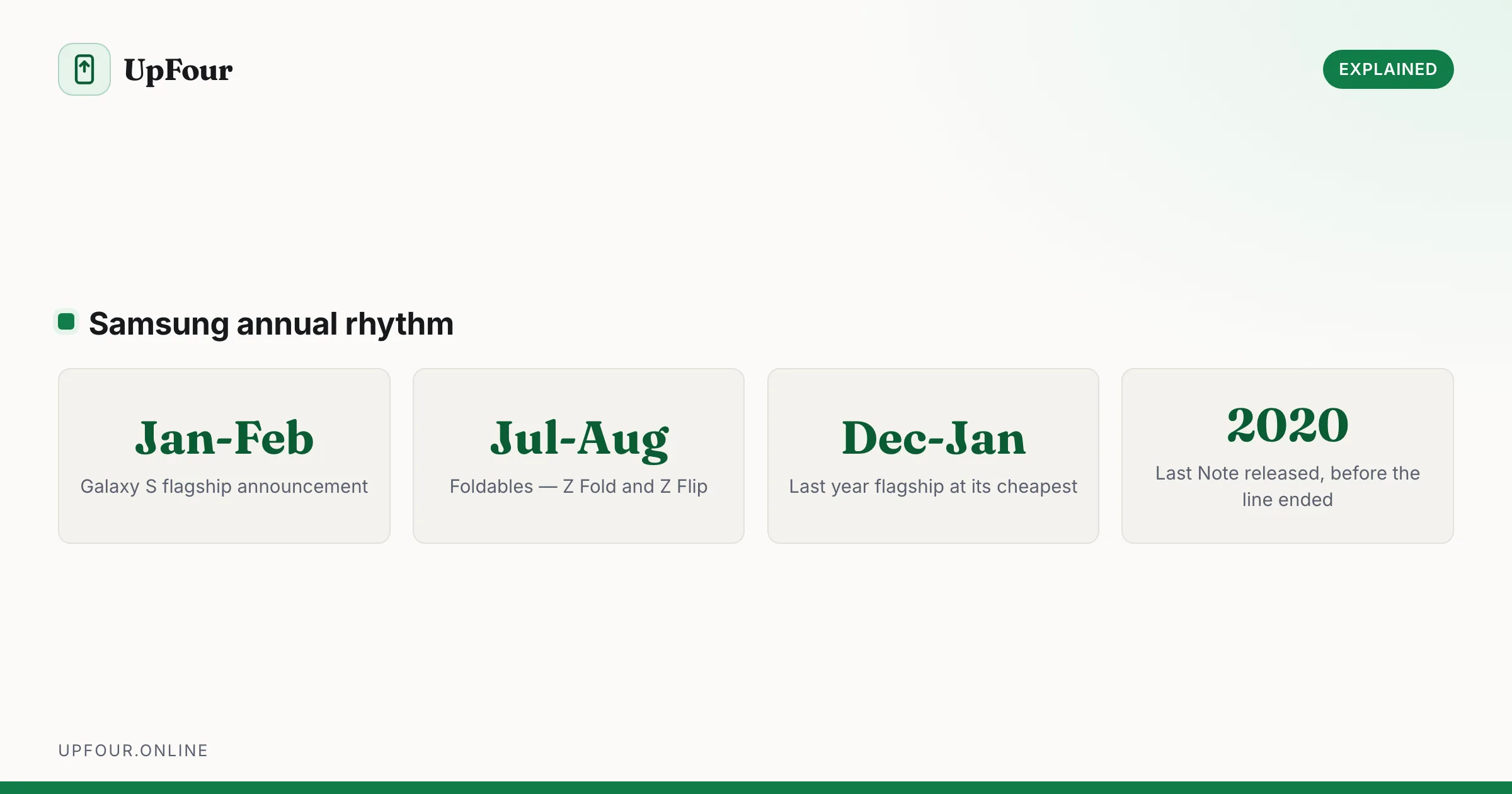
The annual cycle is predictable, so timing is the easiest money you will save. See Galaxy S release dates for the full pattern.
- At launch (January–February). Highest sticker price, but Samsung's best trade-in offers and pre-order bundles of the year. If you have an old phone to trade, launch is genuinely competitive.
- Two to three months after launch. First real discounts appear.
- Mid-year and Black Friday. Reliable discounting across the range.
- December–January, just before the next launch. The previous flagship hits its lowest price.
The best value in Samsung's lineup is usually last year's flagship, bought shortly before the new one launches. It still has years of software support remaining and typically costs far less than the incoming model, for differences most people would not notice.
Costs people forget
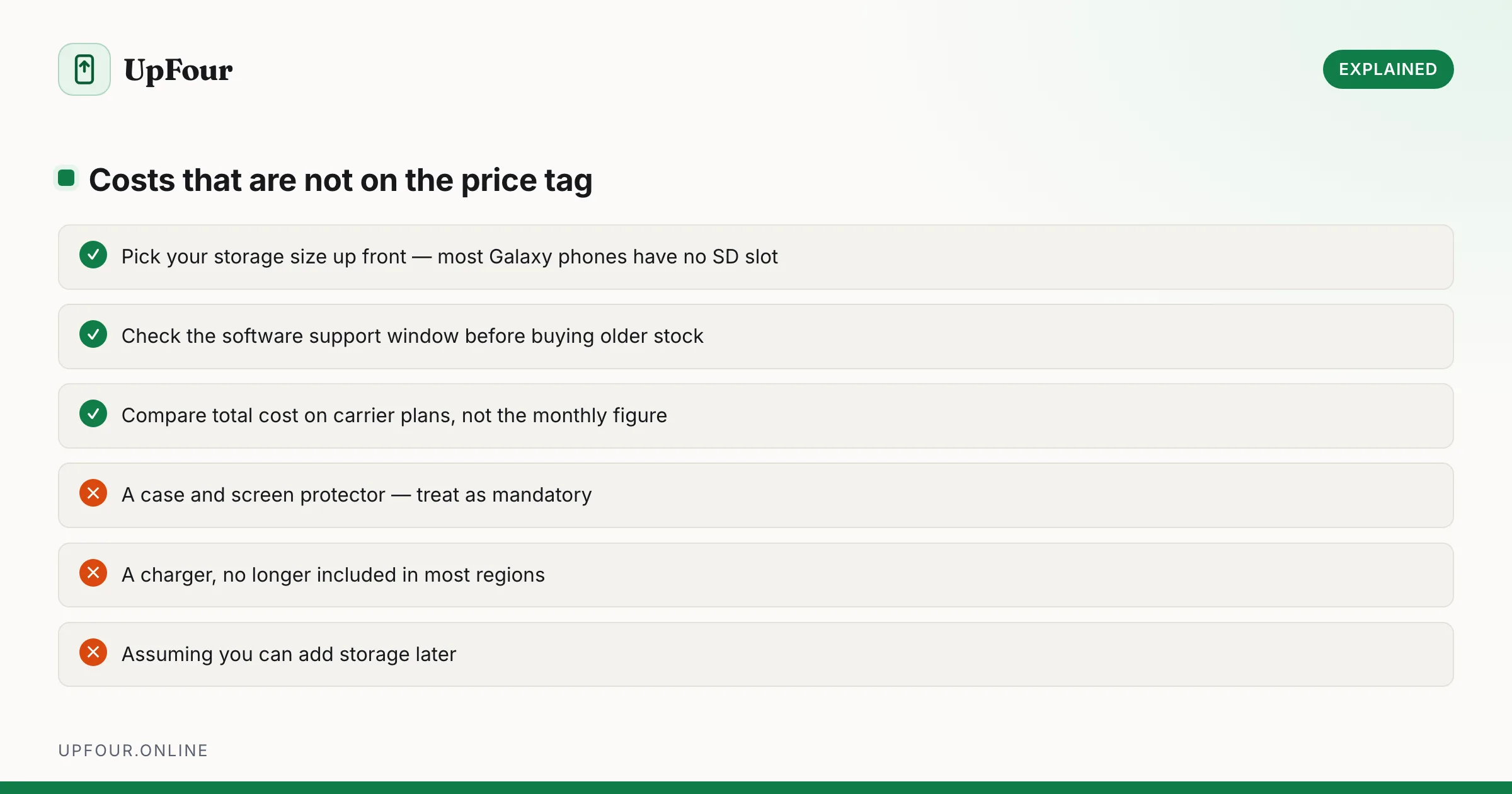
- Storage. The base model is often too small. Moving up a tier costs meaningfully more, and most Galaxy phones no longer have SD card slots — so you cannot fix it later.
- A case and screen protector, which you should treat as mandatory.
- A charger. Samsung no longer includes one in the box in most regions.
- Samsung Care+, if you decide you want it. See is Samsung Care+ worth it.
Budget for these when comparing against another phone that might include a charger.
Where to buy
- Samsung directly — best trade-in values and pre-order bundles, and easy access to the full range of storage and colour options.
- Carriers — lowest upfront cost, but instalment plans and contract terms often make the total higher. Read the total cost, not the monthly figure.
- Retailers — competitive at sale periods.
- Refurbished from Samsung or a reputable seller — a genuinely good option with a warranty attached.
- Second-hand — cheapest, but verify the IMEI is not blacklisted and confirm the seller has removed their Samsung and Google accounts. A phone still carrying Reactivation Lock cannot be activated. See how to remove a Samsung account.
Check software support before buying older stock
A heavily discounted phone from several generations back may be near the end of its update life. Check the model's release year and Samsung's support commitment — recent devices get several years of updates, but older ones had shorter terms.
A cheap phone that stops receiving security patches next year is not a bargain if you use it for banking. See how long Samsung phones last.
How to actually decide
- Set a budget before you look at anything.
- Work out what you genuinely need. Camera in low light? Gaming? Or just messaging and browsing? Most people need less than they think.
- Check storage — pick the size you need up front, since you usually cannot add to it.
- Compare last year's flagship against this year's mid-range at the same price. This comparison surprises people, and the older flagship often wins.
- Confirm the software support window for the specific model.
- Check current prices at Samsung and two retailers. Prices move constantly.
In short
Samsung spans budget A-series through mid-range A-series, S-series flagships, Ultra and foldables. The mid-range A-series is the value sweet spot for most people, and last year's flagship just before a new launch is usually the smartest buy in the whole range. Always check current prices — they change too often for any article to state usefully.
Frequently asked questions
How much does a Samsung phone cost?
Samsung spans four broad tiers — budget A-series, mid-range A-series, S-series flagships and foldables at the top. Exact prices vary by region and change constantly, so use the tiers to decide what to shop for and check current pricing before buying.
When is the best time to buy a Samsung phone?
Usually December or January, just before the next Galaxy S launch, when the previous flagship hits its lowest price. Launch periods in January and February offer the best trade-in values if you have an old phone.
Which Samsung phone is the best value?
For most people the mid-range A-series, which offers an AMOLED screen, capable cameras and long battery life for a fraction of flagship cost. Last year's flagship shortly before a new launch is also excellent value.
Why are Samsung foldables so expensive?
You are paying for the folding display technology and form factor rather than better specifications. A Fold's cameras are typically comparable to a standard Galaxy S rather than an Ultra.
Sources & further reading
Official documentation used while writing and checking this guide. Every link was verified at the last update.
- Samsung phone specifications databaseGSMArena
- Official Samsung SupportSamsung
- Android Security BulletinsAndroid Open Source Project
- Electronics donation and recyclingUS Environmental Protection Agency
Machine-readable version: Markdown source
Related guides
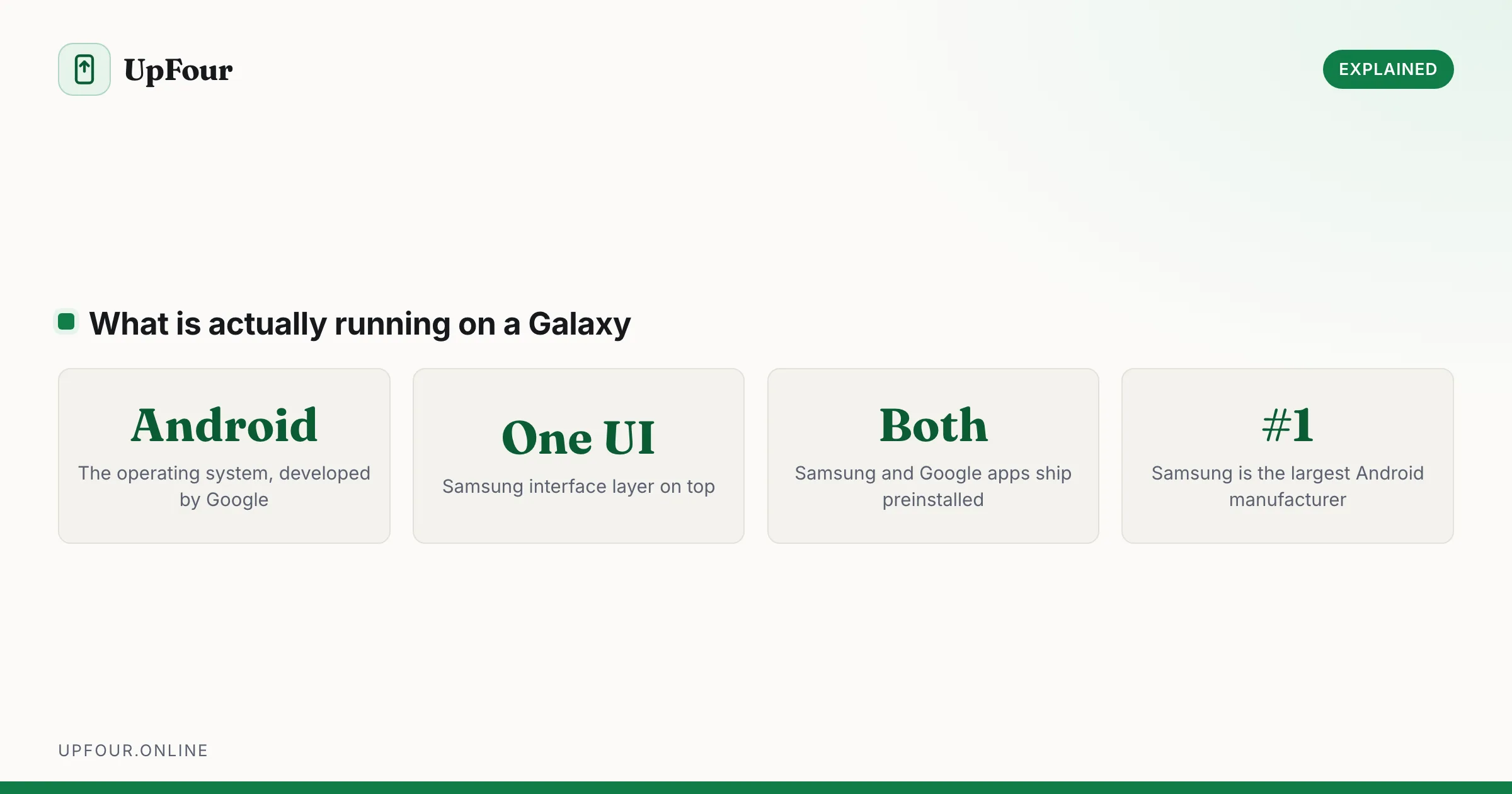
Is a Samsung an Android Phone? Yes — Here's What One UI Actually Is
Samsung Galaxy phones run Android with Samsung's One UI on top. Here is what that means, what Samsung changes, and why it matters when following guides.
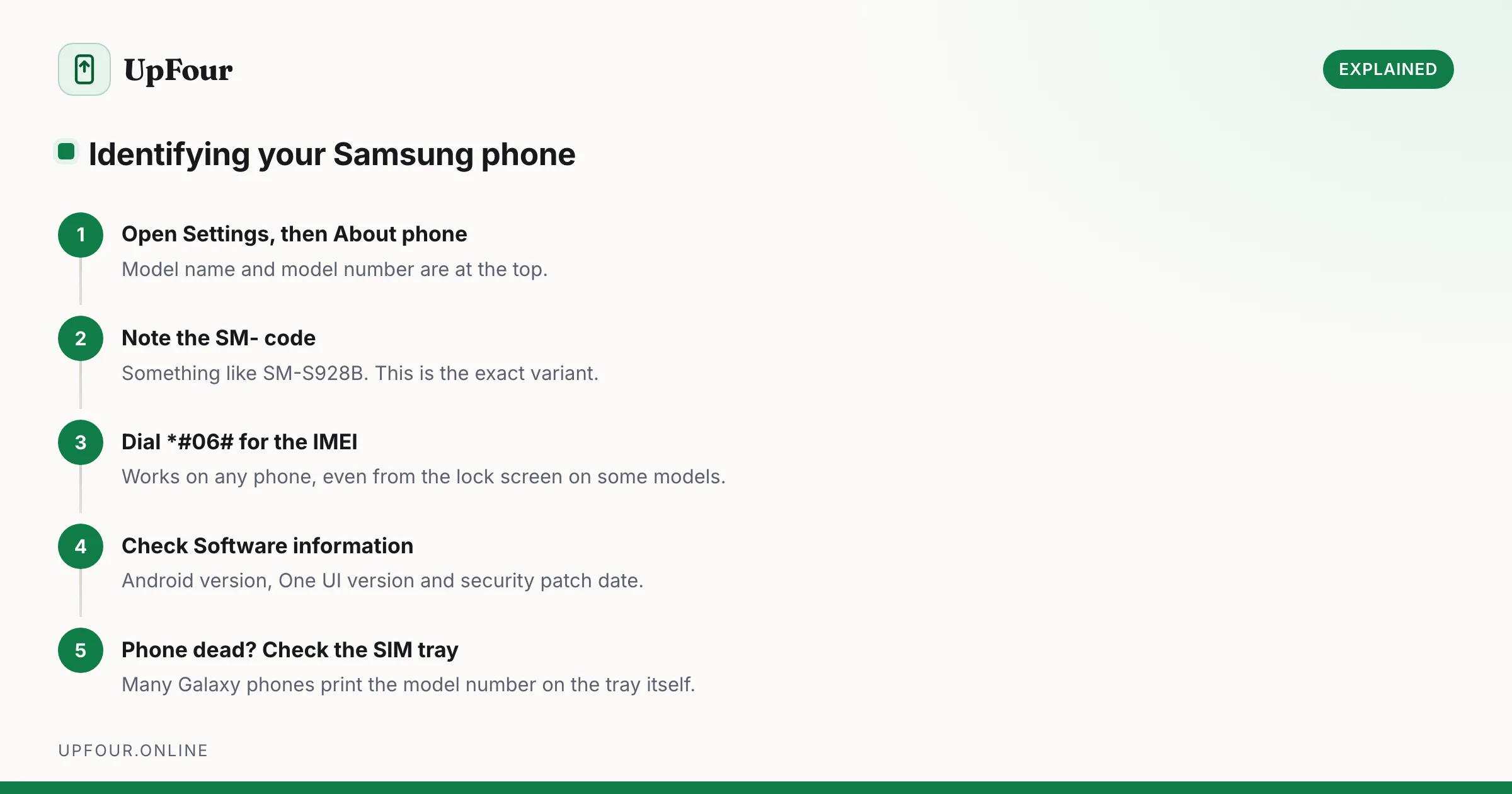
What Samsung Phone Do I Have? How to Identify Your Model
Find your Samsung model name and number in Settings, decode what the model number means, and identify a phone that will not switch on.
Galaxy S Release Dates: Every Samsung Flagship in Order
A complete timeline of Samsung Galaxy S release dates from the original through recent models, plus when Samsung typically launches new phones.